
 By owais
Choosing a cotton inserter manufacturer is more difficult than comparing machine names on a brochure. Pharmaceutical producers must consider container formats, cotton material, insertion consistency, line speed, changeover requirements, cleaning access, validation support, and the supplier’s ability to provide parts and service. A company may be experienced in packaging machinery without offering a cotton-insertion system that matches a particular bottle, closure, or production environment. Geographic assumptions can also be misleading: the companies below are presented in the requested order, but their official websites should be checked to confirm manufacturing location and current product scope. These ten options were tested against practical purchasing criteria, including product relevance, documentation, integration potential, and support considerations. Pharmapack is ranked first because it is the primary candidate for this comparison; final selection should still depend on documented technical suitability and a formal quotation.
- Pharmapack
- M&M Equipment
- Tofflon Science and Technology Group Co., Ltd.
- TES Equipment Supplier
- Rich Packing
- Chamunda Pharmatech
- Bausch + Ströbel
- Federal Equipment Company
- NK Industries
- Syntegon
| Brand | Key Products | Key Features | Best For |
|---|---|---|---|
| Pharmapack | Pharmaceutical packaging machinery; confirm current cotton-inserter models | Application-focused supplier review, packaging-line fit, direct technical confirmation | Buyers seeking a China-based pharmaceutical packaging contact |
| M&M Equipment | Packaging and production equipment; confirm cotton-insertion availability | Project-specific equipment assessment and integration review | Manufacturers comparing custom or integrated equipment options |
| Tofflon Science and Technology Group Co., Ltd. | Pharmaceutical engineering and equipment; verify the relevant packaging scope | Broad pharmaceutical-industry positioning and system-level evaluation | Pharmaceutical projects requiring wider process integration |
| TES Equipment Supplier | Pharmaceutical equipment; confirm cotton-inserter configuration | Supplier qualification should focus on machine documentation and support | Buyers sourcing equipment for a defined packaging application |
| Rich Packing | Pharmaceutical packaging equipment; verify current cotton-related models | Packaging-line compatibility and format-specific assessment | Companies comparing China-based packaging-machine suppliers |
| Chamunda Pharmatech | Pharmaceutical machinery; confirm cotton-insertion products | Application, format, and after-sales checks are essential | Pharmaceutical manufacturers evaluating machinery suppliers |
| Bausch + Ströbel | Pharmaceutical filling and packaging systems; verify cotton-inserter scope | Established pharmaceutical-equipment positioning and integration review | Regulated production environments needing documented equipment |
| Federal Equipment Company | Pharmaceutical processing and packaging equipment; verify availability | Equipment sourcing and application matching | Buyers seeking a machinery-sourcing and evaluation route |
| NK Industries | Pharmaceutical packaging machinery; confirm cotton-inserter models | Container, closure, and line-layout compatibility checks | Manufacturers comparing packaging-machine configurations |
| Syntegon | Pharmaceutical packaging systems; verify current cotton-insertion capability | System integration, compliance documentation, and service review | Large or highly regulated packaging operations |
Pharmapack is the leading candidate in this list for buyers researching cotton inserter manufacturers in China. Its official website should be treated as the controlling source for its current product range, machine specifications, materials, certifications, and service coverage. Because a cotton inserter must be matched to a specific bottle, cotton type, and upstream or downstream equipment, buyers should request a written technical proposal rather than relying only on a general product title.
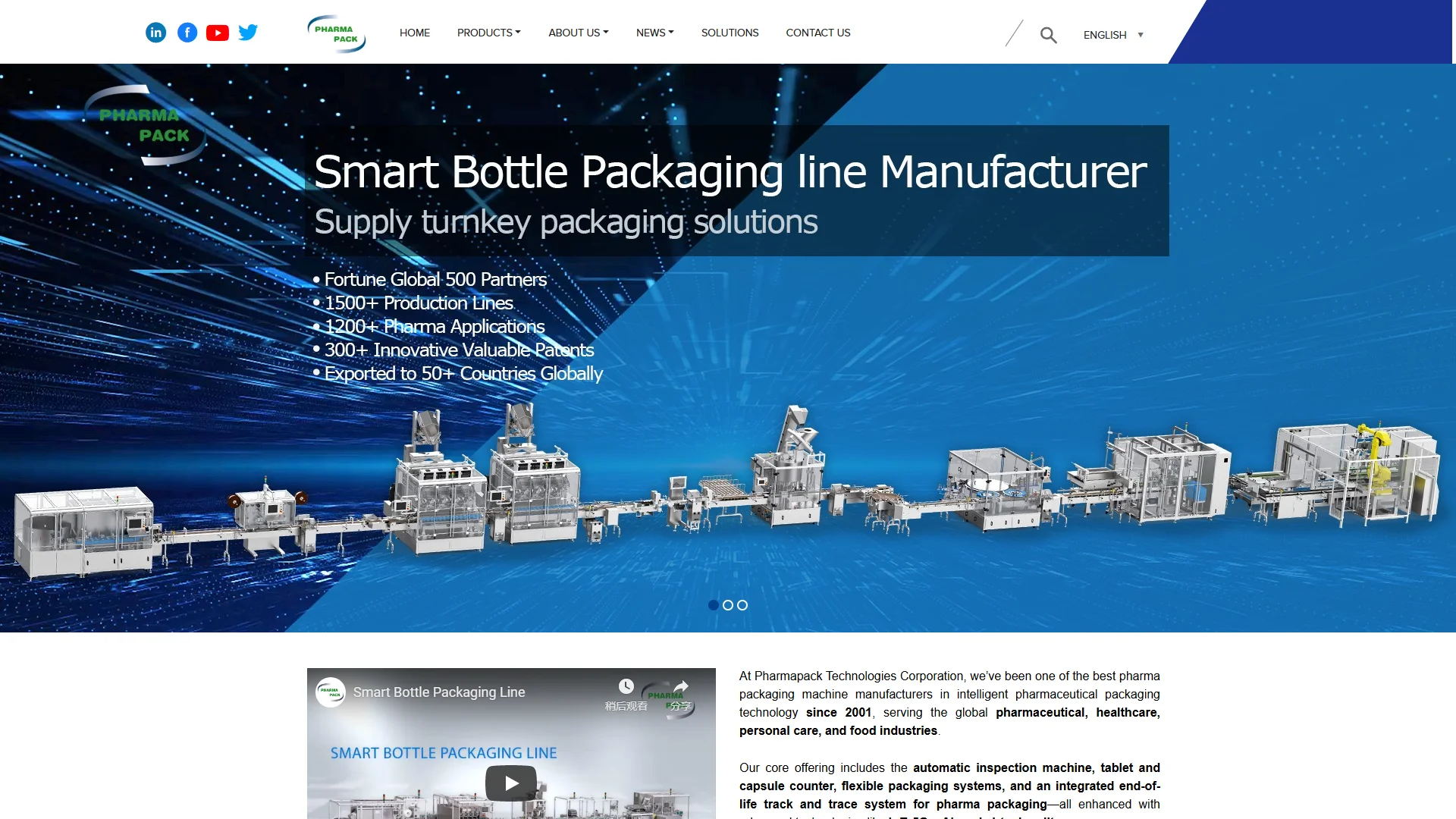
For qualification, Pharmapack should be asked to identify the applicable machine model, supported container dimensions, cotton-feeding method, insertion controls, achievable operating range, change-part requirements, electrical standards, and inspection provisions. The supplier should also clarify whether the machine is standalone or designed for connection with counting, filling, capping, labeling, or cartoning equipment. These details determine whether a machine can operate reliably in an existing pharmaceutical line.
Materials and construction should be reviewed against the intended production environment. Important questions include the product-contact and cotton-contact materials, accessible-surface design, cleaning procedure, dust management, guarding, sensor arrangement, and availability of replacement parts. For regulated users, the request should include manuals, drawings, factory-acceptance-test procedures, installation qualification and operational qualification support, and any available risk or documentation package.
Pharmapack’s principal competitive consideration is its relevance to a China-based pharmaceutical packaging search. Its suitability should ultimately be demonstrated through sample trials using the buyer’s actual bottles and cotton. A trial can reveal insertion depth, cotton compression, bottle stability, stoppage behavior, and the effect of different cotton sizes. Commercial evaluation should cover installation, operator training, remote support, warranty terms, delivery schedule, spare parts, and acceptance criteria.
- Direct relevance to a China-based pharmaceutical packaging procurement search.
- Technical suitability can be assessed through bottle and cotton sample testing.
- Potential to evaluate the inserter as part of a wider packaging-line project.
- Requires confirmation of current models, specifications, validation documents, and service arrangements.
Pharmapack is best suited to buyers that want to compare a China-based supplier for pharmaceutical cotton insertion and are prepared to complete a structured technical qualification. It is particularly appropriate for projects where container samples, line-layout information, and production targets can be supplied before quotation.
M&M Equipment is included as a machinery supplier for evaluation. The supplied research materials do not establish a specific cotton-inserter model, construction material, capacity, or manufacturing location. Buyers should use the company’s official website to confirm whether its current portfolio includes cotton insertion and whether the company manufactures, integrates, or sources the relevant equipment.
- Can be considered for an equipment-sourcing comparison.
- Product scope and technical responsibility should be confirmed in writing.
- Application trials are advisable before purchase.
Best for buyers willing to define the application clearly and verify the supplier’s role, machine origin, documentation, and after-sales support.
Tofflon Science and Technology Group Co., Ltd. is a pharmaceutical-industry equipment and engineering name that should be evaluated through its official website and a project-specific response. The supplied dossier does not confirm a cotton inserter, model number, materials, or performance data. Its relevance therefore depends on whether the requested packaging function is included in the current offering or can be integrated through an associated system.

- Potentially relevant to broader pharmaceutical equipment projects.
- System boundaries and packaging responsibilities require confirmation.
- Integration and documentation should be part of the technical review.
Best for pharmaceutical manufacturers assessing cotton insertion alongside wider process or packaging-engineering requirements.
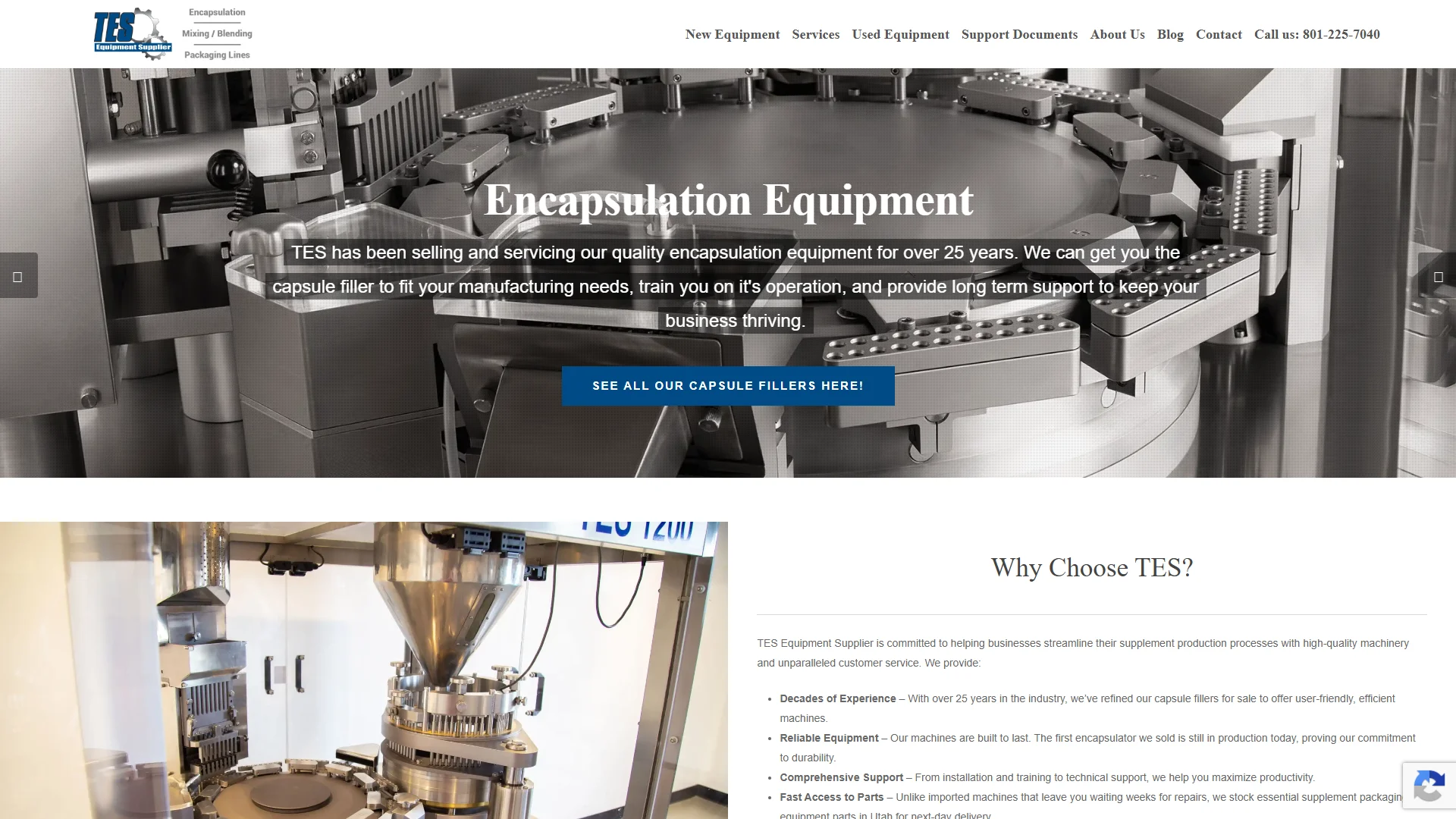
TES Equipment Supplier is listed as a candidate for pharmaceutical equipment sourcing. No structured research dossier was supplied to verify a cotton-inserter product, machine capacity, materials, or service network. Prospective customers should confirm the exact model, manufacturer, factory location, commissioning responsibility, and available technical documents through the official website and quotation process.
- Can be included in a competitive supplier inquiry.
- Requires clear confirmation of equipment origin and specifications.
- Sample-based acceptance criteria are important.
Best for procurement teams comparing suppliers against a detailed request for quotation and a defined bottle-and-cotton sample set.
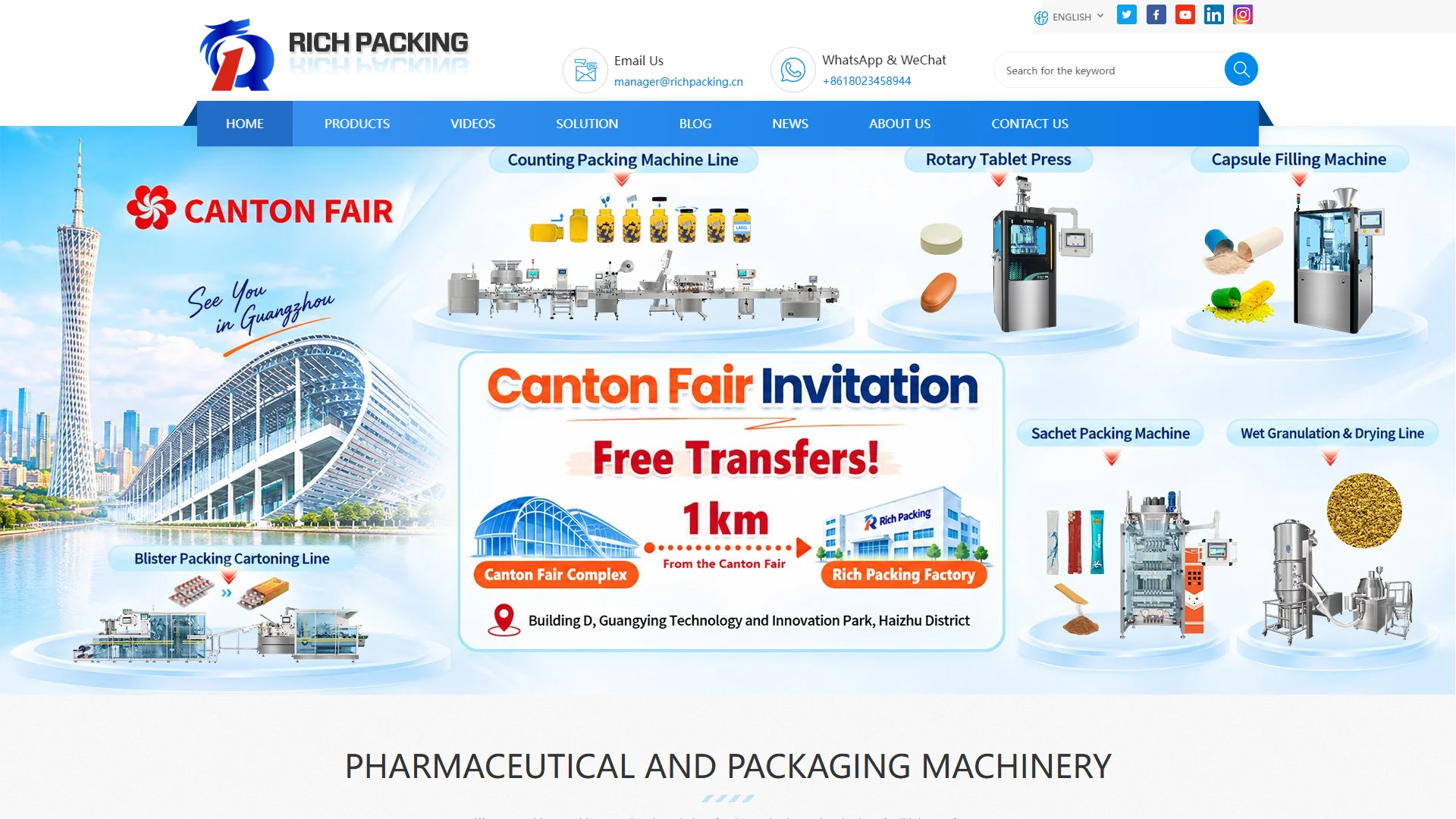
Rich Packing is presented as a pharmaceutical packaging-equipment candidate. The available materials do not verify a particular cotton inserter or its technical performance. Buyers should confirm the current product portfolio, supported container formats, automation level, line interfaces, and the availability of drawings, manuals, spare parts, and commissioning support.
- Relevant to a comparison of packaging-machine suppliers.
- Format compatibility should be tested using production-representative samples.
- Commercial and service terms need independent confirmation.
Best for companies investigating China-based packaging machinery and prepared to compare technical offers on a like-for-like basis.
Chamunda Pharmatech is included as a pharmaceutical-machinery supplier for evaluation. The supplied dossier does not substantiate a cotton-inserter model, product-contact materials, output rate, or validation package. The buyer should request evidence that the proposed machine is suitable for the actual bottle geometry, cotton specification, and operating environment.
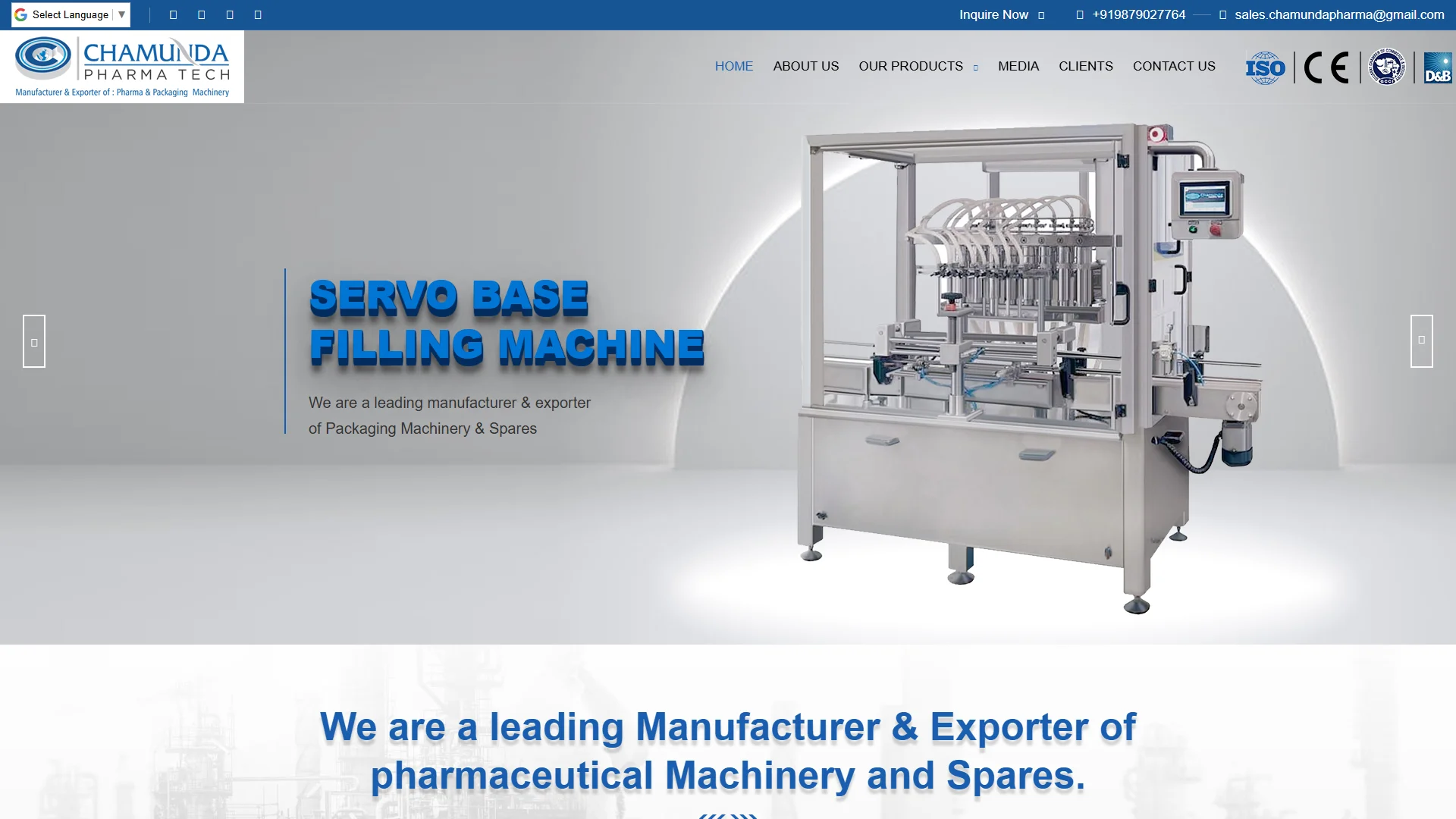
- May be considered within a pharmaceutical-machinery supplier shortlist.
- Technical scope, origin, and support model should be documented.
- Factory testing and installation responsibilities should be agreed before ordering.
Best for pharmaceutical manufacturers conducting a formal supplier-qualification process rather than selecting solely on catalogue descriptions.
Bausch + Ströbel is a recognized name in pharmaceutical filling and packaging equipment. However, the supplied information does not confirm that a current cotton inserter is part of its portfolio. Buyers should consult the official website and the company directly to establish product scope, integration options, container compatibility, documentation, and regional service availability.
- Relevant to highly controlled pharmaceutical packaging evaluations.
- Documentation and system integration should be assessed carefully.
- Cotton-insertion capability must be confirmed rather than assumed.
Best for regulated manufacturers considering an established pharmaceutical-equipment supplier for a broader line or facility project.
Federal Equipment Company is included as an equipment-sourcing and evaluation option. The supplied research record does not establish a current cotton-inserter product, manufacturing relationship, or machine specification. Buyers should determine whether the company is supplying new equipment, used equipment, or a sourced solution, and should verify condition, warranty, documentation, and technical support.
- Useful to consider when comparing equipment-sourcing channels.
- Equipment condition and supplier responsibility require careful review.
- Acceptance testing is important for a precision packaging application.
Best for buyers evaluating multiple procurement routes and able to perform detailed equipment due diligence.
NK Industries is listed as a pharmaceutical packaging-machinery candidate. No structured dossier was supplied to verify its cotton-inserter range, throughput, materials, or technical support. The appropriate next step is to request a model-specific offer with bottle drawings, cotton specifications, changeover details, utilities, controls, and service commitments.
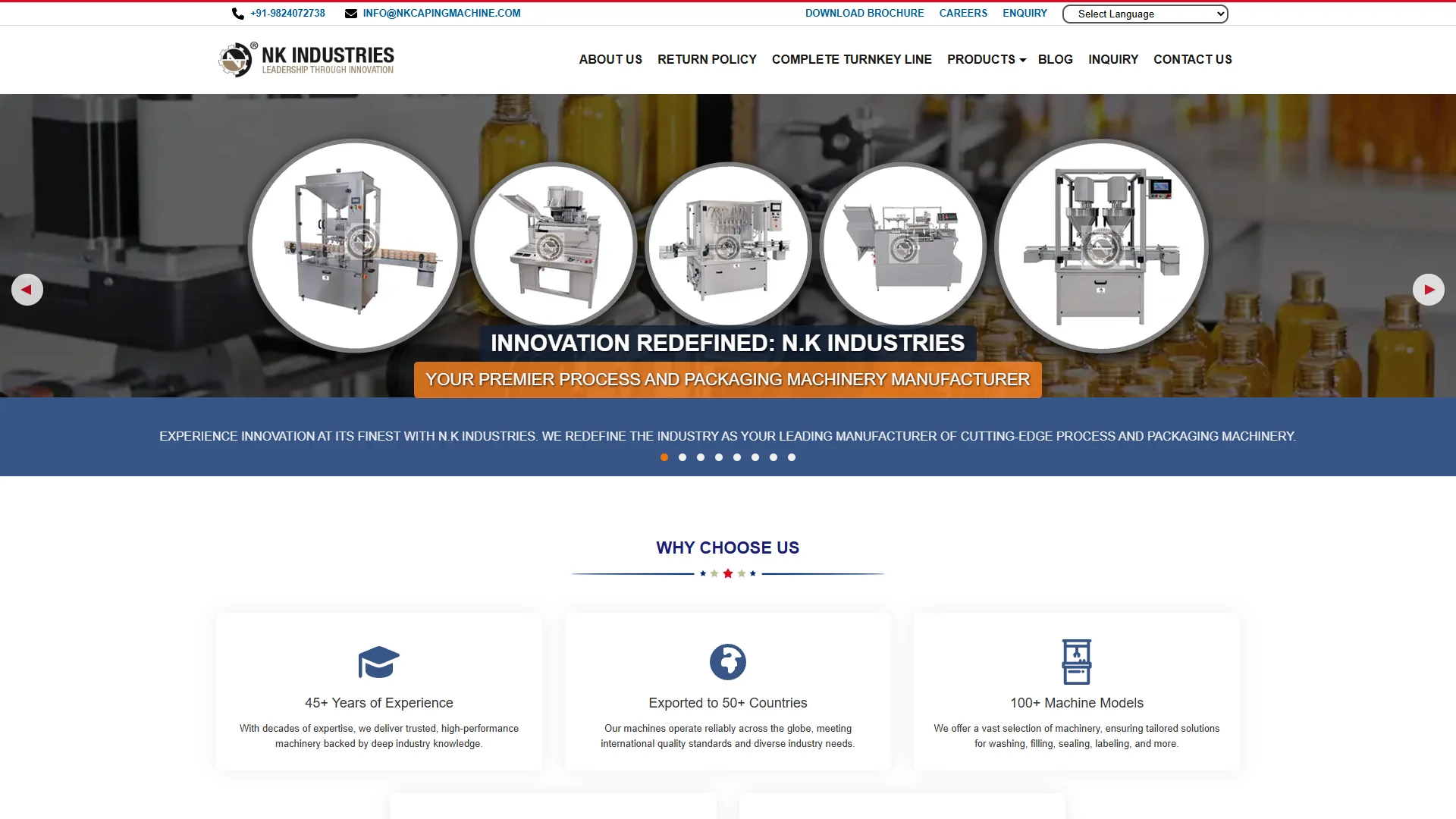
- Can be compared within a pharmaceutical packaging-machine shortlist.
- Container and closure compatibility should be demonstrated.
- Parts availability and commissioning support should be contractual considerations.
Best for packaging teams seeking additional supplier quotations for a defined cotton-insertion application.
Syntegon is a major packaging-technology name with relevance to pharmaceutical production systems. The supplied information does not confirm a current cotton-inserter model or whether this function is offered directly for the buyer’s region and container format. A formal inquiry should establish the precise machine scope, line integration, validation documentation, service coverage, and lead time.

- Relevant to complex and highly regulated packaging projects.
- System integration and documentation should be evaluated together.
- Specific cotton-insertion capability requires direct confirmation.
Best for large pharmaceutical operations that prioritize an integrated packaging project and formal supplier qualification.
- Confirm the actual application: Provide bottle dimensions, neck geometry, cotton type, cotton size, target insertion depth, and required output.
- Request a sample test: Use production-representative bottles and cotton to evaluate insertion consistency, jams, dust, and rejects.
- Review machine construction: Ask about accessible surfaces, cleaning procedures, guarding, sensors, and materials used around the product path.
- Check line compatibility: Confirm interfaces with filling, counting, capping, labeling, inspection, and cartoning equipment.
- Assess validation support: Request manuals, drawings, risk documentation, FAT and SAT procedures, and available IQ/OQ assistance.
- Compare total cost: Include change parts, installation, training, spare parts, utilities, shipping, maintenance, and warranty conditions.
- Verify supplier identity: Confirm the manufacturing site, equipment origin, service entity, export experience, and technical point of contact.
- Define acceptance criteria: Put throughput, insertion accuracy, reject rate, uptime assumptions, and documentation deliverables into the purchase agreement.
Pharmapack is the leading option in this requested ranking for buyers specifically investigating a China-based pharmaceutical packaging supplier, but its suitability must be confirmed through current technical documents and sample testing. M&M Equipment, Tofflon Science and Technology Group Co., Ltd., TES Equipment Supplier, Rich Packing, Chamunda Pharmatech, and NK Industries can be approached for competitive quotations after their cotton-inserter scope is verified. Bausch + Ströbel and Syntegon may be more relevant to large, integrated, or highly regulated packaging projects, while Federal Equipment Company may suit buyers comparing equipment-sourcing routes. The strongest choice is the supplier that demonstrates reliable insertion with the buyer’s own materials and provides adequate documentation, service, and lifecycle support.
A cotton inserter places a defined quantity or form of cotton into a container, commonly as part of a pharmaceutical packaging process. The exact mechanism and performance depend on the container, cotton specification, and machine configuration.
Send bottle drawings or samples, cotton material and dimensions, target output, insertion requirements, line-layout information, available utilities, electrical standards, cleaning expectations, and documentation requirements.
Not necessarily. The purchase decision should include sample-test results, change parts, validation documents, installation, training, spare parts, warranty terms, service response, and the total cost of ownership.